
Desert Modern Design
Palm Springs, the popular desert resort spot in Southern California’s Coachella Valley, has been a major influence on U.S. architecture and interior design since the mid-20th century. During that time, people have associated Palm Springs with numerous design styles. Among the best known are the Hollywood Regency, Googie, Las Vegas, Palm Springs Resort, and Southwestern styles (all described below). However, greater Palm Springs is most closely associated with a variant of West Coast Modernism known as Desert Modern style.
Desert Modern style interiors incorporate natural materials, organic textures, muted desert colors from nature, and plentiful texture. Pattern is less commonly used in Desert Modern homes. An essential part of the style is the way it echoes surrounding desert environments, bringing elements from the landscape indoors. Desert Modern design also takes its cues from the casual, laid back nature of the Palm Springs lifestyle. It supports relaxed indoor/outdoor home entertaining, and finding relaxation and comfort at home despite a harsh and unforgiving desert climate.
Learn more about Palm Springs’ journey from rustic health retreat to major architectural and design center in my article The Origins of Palm Springs’ Modernist Architecture & Design.
How West Coast Modernism Inspired Palm Springs Style
West Coast Modernism is a distinctive regional architectural style that developed in Canadian and U.S. West Coast cities such as Vancouver, Seattle, Portland, and San Francisco. Instead of scrupulously adopting universal design principles, this style takes regional context into consideration. Landscape, climate, materials, and local culture and lifestyle all determine comfortable and compelling designs and furnishings for West Coast homes.
On the East Coast, midcentury modern (MCM) homes originally took design cues from theoretical architectural principles. These principles were developed and taught by major European modernist architects of the 1920s and 1930s. But their interiors didn’t necessarily reflect what was happening outside. West Coast Modern style, on the other hand, considers setting, local weather, and climate. These elements determine both interior and exterior decor, feel, and functionality. This particularly North American style takes structural and color cues from organic materials, shapes, and color palettes.
Bringing the Outdoors Inside
Bridging indoors and outdoors by extending living areas from inside to outside is common to people on the West Coast. States along the Pacific Ocean have a generally milder climate than those on the Atlantic. This allows West Coasters more days of indoor/outdoor living each year. As a result, millions of people in the West enjoy plentiful year-round outdoor activity and a relaxed, casual lifestyle.
The development of Desert Modernism took important cues from West Coast Modernism. But while northerly West Coast regions has more variable climates, inland Palm Springs stays hot and dry all year round. Desert dwellers figured out ways to use shade, well-channeled air flow, and traditional regional materials into weapons against extreme heat.
Palm Springs’ dramatic landscape provided rough and exciting natural forms like boulders, cacti, jagged mountains, and endlessly tall palm trees. These elements added plentiful natural textural interest to Desert Modern homes. More than any other style, Desert Modernism takes Palm Springs’ natural setting into account, creating a singular style and feeling.
Although the style has moved beyond midcentury modernism, MCM style principles still have a big impact on Palm Springs’ signature style. That’s why this article refers often to midcentury Palm Springs homes and decorative and architectural elements. They can still feel at home in a contemporary Desert Modern home. Incorporating at least a few of them gives a sense of context and history. They can sometimes evoke a bit of whimsy or nostalgia as well.
What Does a Desert Modern Interior Look Like?
This style emphasizes relaxed elegance, plentiful natural lighting, and sturdy, strong, clean lines. The house, its setting, and its furnishings should feel functional yet stylish. Though it often includes soft sofas, chairs, pillows, and rugs, this style tends toward more hard-edged, unadorned surfaces. It’s more minimalist than many design styles. Indeed, not all seating is upholstered in a Desert Modern home. Consider the elegant simplicity of organically shaped Scandinavian wooden furniture, for example. It fits well with the minimalism of Desert Modernism.
This style relies on pronounced horizontal and vertical lines, including hard-edged and rustic natural elements. It can incorporate fabricated materials like steel, concrete, and large glass panes. Its relative lack of applied decoration can make Desert Modern homes feel less soft and cozy than other styles. However, decorators who favor it usually include some handcrafted objects and layers of softness over hardness in their spaces. This keeps interiors from becoming too austere. The style also emphasizes warm colors. Even neutral hues are in the cream, sand, and brown family, not in the land of the greys.
Palm Springs-style Desert Modernist interiors prominently feature natural materials and uneven, organic, curvy shapes. Contemporary homes in this style often include pale, rounded sofas, live-edge tables, or thick—even sculpted—area rugs. Rounded glass tables allow light to flow freely through rooms. Upholstered banquettes, and low, slatted, backless wooden benches along walls leave ample open space while providing plentiful seating. And a focus on low horizontal lines echoes horizontal MCM architecture, and avoids taking up a lot of visual space.


Left: The Cholla Room at Joshua Tree House is in a Desert Modern 1949 hacienda providing lodging near Joshua Tree National Park | Margaret Austin Photography for JTH || Right: Joshua Tree House Tucson has a relaxed desert feeling. Like Joshua Tree House at left, the Tucson location uses soft, organic colors and materials with rustic elements | Joshua Tree House Tucson
Some darker pieces may be included to “ground” pale rooms, which may little bland without a touch of contrast. These might include some dark wood side tables or benches, wood and leather vintage Eames lounge chairs and ottomans, or literally grounded terrazzo floors. In practical, easy-care terrazzo, tiny tesserae (pieces of mosaic tile) are embedded in the floor to provide visual texture.
What Desert Modern Style Is Not
Desert Modern style is minimalist at heart. Fabrications and furnishings emphasize natural elements, neutral colors, and manufactured materials in their least adorned forms. These include poured cement floors, boulders, and steel-framed furnishings. Before we discuss the style, we’ll first touch on other popular styles that people sometimes associate with Palm Springs. Let’s discuss what Desert Modernism is not.


Googie designs: Left: Elm Road Drive-In Theater, Warren, Ohio (CC-BY-SA–2.0) | Jack Pearce || Center: William F. Cody’s Del Marcos Hotel, Palm Springs | Laura Grey || Right: Sparkle Car Wash, San Bernardino | Cogart Strangehill (CC-BY-SA–2.0)
Googie
This space-age, retrofuturist variant of MCM style was inspired by 1950s L.A. car culture. Imagine midcentury motel signs, drive-in restaurants, and drive-in theaters. Now think of signage with offset lettering, starbursts, satellites, and spaceships. Googie shapes are wild, colors are bold, rooflines prominent and angular, and windows oversized. Its large display typefaces tend toward the whimsical.
Googie was inspired by American optimism about space exploration, technological advancement, and adventure. In contrast, Desert Modern style draws from and celebrates the grandeur and natural beauty of the desert. Desert Modernism was developed by the innovative architects who made Palm Springs one of the capital cities of West Coast cool. It’s not about attracting attention, as Googie designs are meant to do.
The term “Googie architecture” was coined in 1952 in House and Home magazine. Editor Douglas Haskell was inspired by Hollywood’s Googie’s Coffee Shop, designed by architect John Lautner. The name “Googie” was soon applied to similar buildings designed by Lautner and others. However, architects soon took to using “Googie” to deride what they saw as a tacky style not based in tradition. It was often associated with shoddy workmanship. East Coast elites associated it with what they saw as West Coast vulgarity. Lautner found his association with the term so damaging to his reputation that he eventually came to avoid the press.
Las Vegas
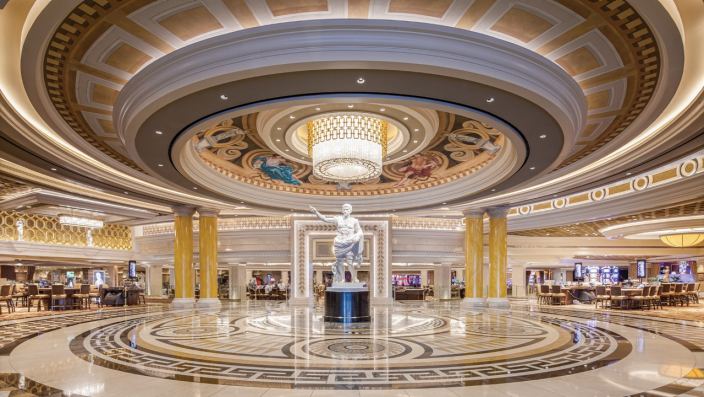
Popular culture often equates Palm Springs style with Las Vegas bling. The two desert styles are literally based hundreds of miles apart. The heart of Las Vegas is its Strip, a long, blindingly brightly lit boulevard. The Strip combines everything big and bold into an intense celebration of over-the-top extremes. Artifice is the goal; desert surroundings are an afterthought. Meanwhile, Palm Springs’ architecture elevates and embraces natural forms. Desert Modern style celebrates the desert landscape and the architects who embraced Palm Springs’ own variant of West Coast Modernism.
Some designers walk a fine line between the desert-specific vibe of Desert Modern style and the glitz of Las Vegas. For example, consider Las Vegas company Jules Wilson Design’s “Uncommon,” an arresting common area. It offers sleek lines, natural materials, and midcentury staples like terrazzo floors, elegant wood paneling, and oversized plate-glass windows. But then come those splashes of Vegas dazzle: curves galore, large sweeps of bold orange, and indoor cactus landscapes. This shows how a creative and tasteful designer can find unexpected sweet spots between adjacent styles to create something altogether fresh and exciting.

Hollywood Regency
This style has roots in Art Deco glamour and European Moderne style. It’s theatrical and dramatic, with mirrored or glossy surfaces, flattering cinematic lighting, and luxe fabrics like velvets and shimmery satins. This is an opulent and formal style, like something from a 1930s or 1940s Carole Lombard or Joan Crawford movie. Hollywood Regency style migrated to Palm Springs with Hollywood designers like William “Billy” Haines, who brought Tinseltown glamour to what had been a rustic Western town. The style has more delicate variants involving cut glass Venetian mirrors and rooms swathed in chinoiserie wallpaper and upholstery. However, the best-known Hollywood Regency rooms call for deep jewel tones or crisp black and white patterns. They also offer plentiful gilded light fixtures and hardware. Dramatic Deco patterns or animal prints work well with this style. Contemporary designers who work in this style include Jonathan Adler and Kelly Wearstler.

Palm Springs Resort
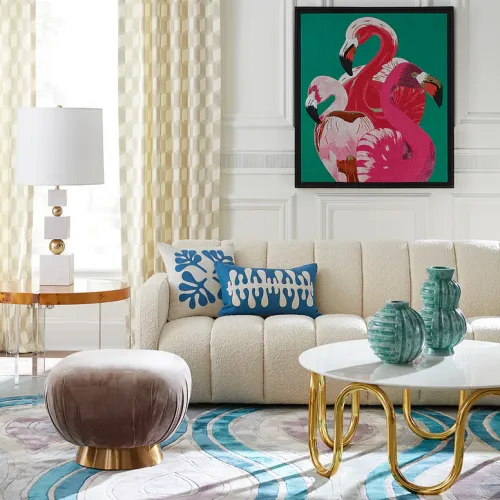
This popular style variant is built around cheerful, saturated colors, sleek mod shapes, and groovy patterns. It evokes late 1960s to early 1980s glam. You’ll find it in the work of furnishings designer and ceramicist Jonathan Adler, who decorated the Parker Palm Springs Hotel. Adler also excels at a softer minimalism via his series of white bisque vessels and animal figures. These fit well into the Hollywood Regency style mentioned above. However, his bolder, glossier line of decor and high-end furniture pieces perfectly suit the resort vibe.
Adler combines 1970s-style colorful graphic patterns with the symbolism of 1980s decadence and glamour (e.g., recreational drugs and sexy vessels). You’ll also find the vivid colors, preppy patterns, and glossy chic of this style in designs by Lilly Pulitzer and Tori Burch.
Southwestern
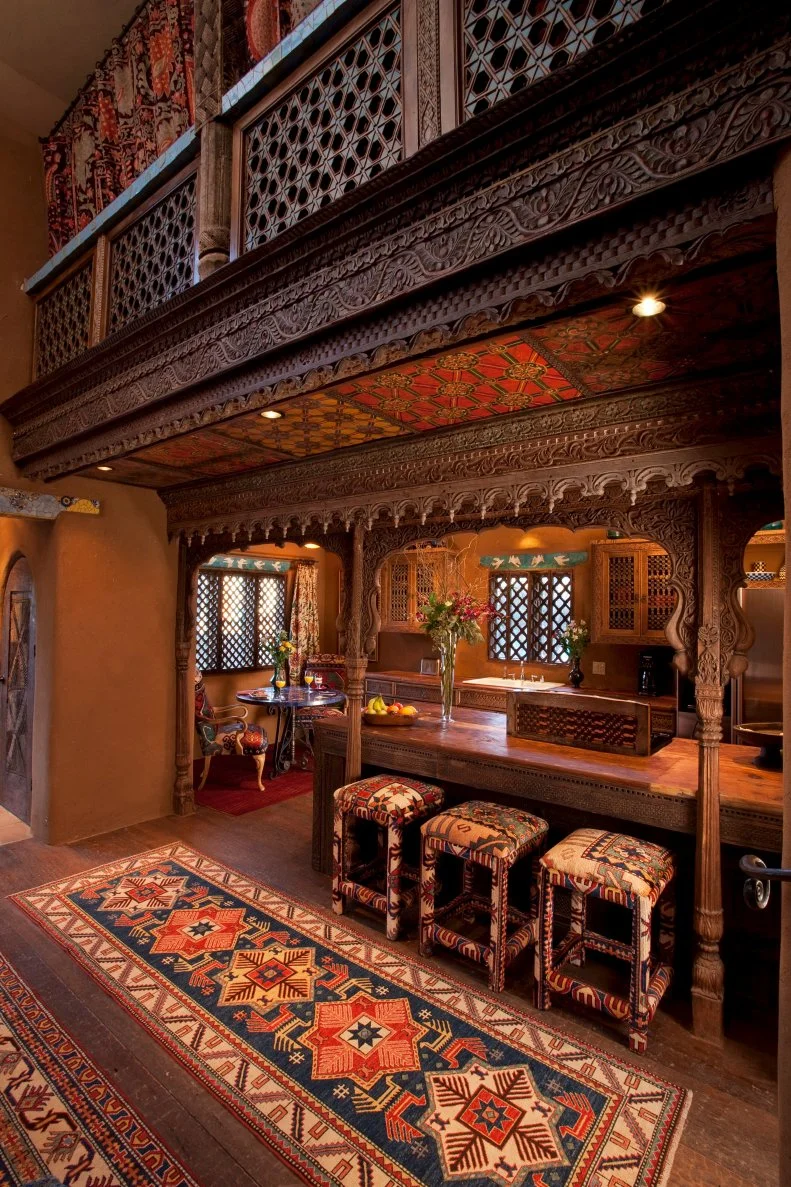
Southwestern Style has its roots in places like Arizona, Nevada, New Mexico, and Texas. It combines elements from Mexican, Native American, Spanish Colonial Revival, cowboy and rancho styles, and even Mediterranean design traditions. Commonly found in vacation lodges, Southwestern is often a rather heavy style. It frequently features dark ceiling beams, large leather chairs and sofas, darkly stained carved wooden furniture, and black wrought iron. Other staples of the style include Navajo rugs, blankets and pottery, and Mexican painted tiles. Bleached animal skulls or horns may hang over doorways or mantels. Cowhide area rugs add pattern to dark clay tile floors. Some variants of the style are rich with ornamentation and jewel-toned colors, bringing Moorish influences into the mix.
If applied with a light touch, some Southwestern elements can play well with Palm Springs’ Desert Modern style. However, Southwestern Style is usually visually busier; it uses more applied decoration and patterned elements. It also tends to incorporate more color and culturally-coded decorative elements, and heavier, more embellished wooden furniture.
Handle Southwestern Style with Care
Though it can be achieved with taste and respect, Southwestern decor sometimes veers into cultural appropriation territory. Watch out for mass-manufactured decor that pretends to be part of an authentic traditional aesthetic, but actually isn’t. Objects that portray cultural stereotypes (especially about indigenous peoples) are troublesome. So are items designed or manufactured by people who don’t belong to those cultures. This sort of problematic decor was common during the midcentury era. For example, consider objects inspired by but not actually created by indigenous American people that depicted them in stereotypical ways. These are now viewed as culturally insensitive, especially when displayed by people who don’t share in the cultures being depicted.
Dressing your home in a style that has nothing to do with your own culture may be intended as an homage. However, showing sensitivity to the cultures that created those styles helps avoid any impression of disrespect. So does buying authentic furnishings directly from people who come from those cultures. Avoiding decorating a space to look as if it were playing dress-up in another culture’s clothes is the safest choice. It’s less likely to offend.
Decorating a Desert Modern Home
Desert Modern homes almost insist that interior furnishings stick close to the style of the buildings themselves. A horizontally oriented house in an austere landscape doesn’t welcome delicate, frilly ornamentation. It begs for furnishings that hold their own against harsh elements like intense sun and sand storms. Desert Modern homes should stand out against a bold backdrop (think: spiny cactus, huge rocks, and extensive flatlands). Such homes call for weight, texture, and structure. These homes aren’t generic; they should have a point of view.
Not Your Grandma’s Midcentury House

Like other minimalist styles, Desert Modern homes tend to be spare and feature subtle colors. They’re short on decorative detailing. Such unfussy interiors don’t feel as “done” as other styles popular in Palm Springs. For example, Hollywood Regency and Palm Springs Resort Style celebrate color, decoration, and formal balance. But Desert Modern-style homes were favored by no-nonsense actors like Steve McQueen. Their Palm Springs homes were designed to project a more earthy image.
There’s no reason you can’t make a Desert Modern home feel relaxed, light-filled, cozy, and welcoming. But it’s not likely to be called “grandmotherly” or “cute.”
Larger, minimalist, high-quality, and unfussy—these are descriptors to keep in mind when choosing furnishings for such a home. This isn’t a style meant for delicate furniture or decor, or for putting lots of tchotchkes on display. Consider using simpler, well-made, low-slung (or at least heavily horizontally oriented) sofas, ample area rugs, and long, low wooden benches. Each item will stand out more in such a minimalist setting, so good quality and finish really matter.
Keep Things Uncluttered but Interesting
Having fewer, larger pieces of art in your home keeps a Desert Modern style house from feeling fussy or cluttered. Consider hanging paintings or prints, Navajo rugs or blankets, or large macramé wall hangings. These add shape, curves, and natural patterns. A bold piece of vintage brass wall decor or a sunburst clock over the mantel can evoke an MCM moment. Just avoid clutter, and keep a good flow through the room so you can navigate furniture easily from any direction.
Boxy, upholstered vintage velvet club chairs or an Eames chair with a matching ottoman give a room a luxurious lift. If you’d rather skip chairs, or have a large space to fill, use multiple sofas and loveseats in a room. These can match or coordinate. Matching furniture pieces to each other was popular during the midcentury period, but that look now feels formal or dated. Contemporary designers use unmatched but coordinating pieces to give a room variation, and make it look curated over time.
Classic Desert Modern Elements
A contemporary Desert Modern color palette is based on natural colors of the desert. These include the pale blue of the desert sky and the colors of rocks, sand, clay, and soil. The style can include dark woods and richly colored tiles and bricks. It uses little black, and mostly avoids swaths of vibrant color.
Color can be welcome in smaller doses in decor pieces. These include pottery, decorative glassware (like vintage midcentury Venetian glass), paintings, or fresh flowers. Desert Modern home furnishings sometimes include the bolder versions of earth-toned colors that emerged in the later sixties. These include lemon yellows, bold rusts, saturated coral reds, and dark chocolatey browns. But Desert Modern style usually uses bold color only as accents. Patterns tend to be textural—think grasscloth wallpaper and cane-backed dining chairs. Sometimes they’re based in Southwestern indigenous art (such as pottery and rugs). However, palm-patterned wallpaper can also fits a Desert Modern mood.
Furniture
The curving, organic shapes of Danish modern or other midcentury Scandinavian furniture pieces work well in a Desert Modern home. If you prefer heavier, darker pieces, consider Mission or Arts and Crafts style furniture (like Stickley chairs or Mission-style tables and cabinets).

Though interiors are often light, using something dark in each room grounds it. This keeps a Desert Modern room from seeming untethered and floaty. But don’t fight the relaxed, light-filled vibe, or make an open-plan space feel invaded by overbearing man-cave furniture. Let each room breathe. Here are possibilities:
- Try big, low, flat sofas in neutral white or cream (to mimic whitewashed adobe buildings). Or use natural, soft shades of sage, olive, or celery green. These remind us of the natural greens of succulents, Joshua trees, and the ubiquitous palm trees.
- Round leather or textural solid upholstery-topped or even macrame-covered poufs are reminiscent of huge round cacti. They add whimsy without being too cute.
- Pairs of squared-off, upholstered club chairs are classic.
- Low glass-topped coffee tables add shimmer. They don’t take up visual space, making the room feel more open and airy.
- The 1950s to the 1970s saw lots of inventive shelving and cabinetry units suspended from wall brackets above the floor. These “floating” storage spaces created a streamlined feeling and avoided cluttered floors. The most elegant versions were made from mid-toned woods like walnut or teak. Paler golden maples are also authentic to the period. Floating cabinetry was often painted with hard-wearing off-white enamel.
Rugs, Walls & Flooring
Natural colors, textures, and materials are keys.
- Rugs, wallpapers, or walls painted in mustard or gold shades remind us of sand. Greens (pale to medium sage, olive or blue-green) remind us of palms or mountain greenery.
- Walls tiled with whitewashed concrete or cream-glazed horizontal ceramic tiles can emphasize a low-slung home’s horizontal orientation.
- Terrazzo floors are timeless, practical, and easy to care for.
- Rya rugs—shaggy, boldly patterned, handmade Scandinavian area rugs—were very popular in the 1960s and 1970s. These usually earth-toned rugs are still quite collectible.
- Roughly whitewashed plaster walls, weathered red clay bricks, and simple red clay tile give an earthy authenticity to a home.
- Sisal or other flat, natural fiber rugs go well with natural materials and neutral spaces.
Millwork & Built-Ins, Stained or Painted
Freestanding Danish modern wood furniture was popular in MCM homes. Built-in cabinets, desks, and bookshelves were common. Stained built-ins were often made in pale woods like beech, birch, or maple. Hardwoods like walnut or teak are also classics. These furnishings fit well in a Desert Modern home.
Not everyone could afford quality stained-wood built-ins during the midcentury period. Many homes had painted built-ins. These included bookshelves and bookcases, and corner dish cabinets in dining rooms. Vertical linen cabinets and wall-mounted desks were often crafted of inexpensive plywood and painted with white enamel paint. Painted versions aren’t as high-end as stained wood cabinetry. However, opting to paint MCM-style built-ins with semigloss white or cream paint is true to the period. In true minimalist style, cabinets that blend in don’t add visual clutter.
Desert Modern homes often feature built-in low benches—sometimes slatted, sometimes topped with upholstered cushions with contrasting or matching piping. MCM homes were often compact, so space-saving built-ins are appropriate. These include banquettes and tables in the breakfast nook, or deep fireplace surrounds with built-in bookshelves flanking the firebox.
Decor

Natural materials and neutral colors can act as beautiful backdrops to your collections. They flatter midcentury Scandi pottery, Mexican ceramic figures, or carved African wooden figurines. Desert Modern minimalism won’t fight with artworks or favorite furniture pieces like those. It also works with the decor pieces mentioned below, which were popular during the midcentury period.
- Large abstract paintings
- Oversized macramé hangings
- Clusters of colorful Venetian glass vessels
- Bar carts with cocktail glasses and decanters
- Midcentury carved dark-wood bowls filled with mixed nuts and nutcrackers—these were popular midcentury staples
- Rugs or cushions in bold rust or soft coral colors mimic the clay bricks and tiles of the Southwest
- Brass platters, bowls, candlesticks, and lamps bring shine indoors
- Southwestern Native American arts—regional indigenous artists’ pottery, rugs, and blankets—make even neutral interiors feel more personal
Bolder Desert Modern Elements
Desert Modern houses welcome statement pieces with subtle colors and minimal applied decoration. Objects from nature and well-crafted organic objects from around the world fit the style well. Handmade textures are apropos, but well-made midcentury-style commercially made products can also work well. Consider textural Finnish glassware, earthy Nordic ceramics, or sixties-style white bisque pottery by contemporary ceramicist Jonathan Adler. These are good if you want a paler, more neutral home that goes with contemporary Desert Modern aesthetics. (If your tastes skew toward bolder late-sixties colors and patterns, try Adler’s smooth, colorfully mod 1970s and 1980s-style furniture and decor.)
What about the vibrant colors we see in MCM resort homes, and in hotels in movies of the 1960s and 1970s? Can’t those be elegant and follow authentic Desert Modern principles?
Yes, you can use bold solid or MCM-style patterned upholstery on dining room chairs. A large, low, rectangular, lemon-yellow or coral colored sofa can be an attractive anchor in your living room. (Using solids rather than print upholstery tends to fit this style best.) But bold hits of color are accents in the primarily more subtle, natural atmosphere of a Desert Modern home. Such homes often rely more on neutral or natural colors than on saturated hues. If you want a lot of color and pattern in a Desert Modern home, consider the Palm Springs Resort style.
Let One (or Two) Pieces Star in Each Room
Is a relaxed, contemporary, elegant Desert Modern style your goal? Then choose one bold item (or one set of items, like dining room chairs) to be the star of each room. Then your furnishings won’t fight with each other or any exciting MCM architectural elements in the room. Not filling a room with too many dramatic furnishings lets bold furniture or architecture really shine. These include windows garden or pool views, built-in cabinetry, a sunken living room, or quality walnut paneling.
Sometimes a big room can support two big co-stars. This might be a long, low sofa on an oversized, shaggy white Flokati rug. Or maybe you have a 1958 china cabinet and a vintage Danish modern dining set. If you let a pair of bold pieces share equal billing, flank those star furnishings with supporting players. Or upholster your other furniture in neutral or serene solid colors.
Achieving Balance in a Desert Modern Home
The setting of a Desert Modern style home is often the actual star of the house. That means integrating the style with the surroundings—and avoiding stealing too much attention from nature—is key.
To stay more traditionally Desert Modern, you might try using vintage midcentury chairs or a sofa with a wooden frame. Then have the cushions recovered in textured solids in 1960s-style midcentury colors. These might be classic hues such as celery, sage, olive, burnt umber, chocolate, rust, coral, gold, creamy yellow, or bone. If you use patterned upholstery, it’s safest to stick with a single print alongside coordinating solid pieces.
Midcentury homes often used a single upholstery print or solid fabric throughout a room. This might mean matching the sofa and side chairs, and adding matching drapery. While authentic to the period, such matchy-matchy furnishings are out of style in contemporary Desert Modern homes. They can make your home look like it’s wearing a dated costume instead of fitting into a contemporary lifestyle.
Desert Modern Window Treatments
Big picture windows or sliding glass doors feel appropriate for a midcentury living room or family room. Tall, narrow double-hung windows tend to fight a horizontal orientation. If you have tall windows with dark trim, paint the trim to match the wall color. The windows will blend in better. If you want window treatments on large windows, avoid drapes. Though common to MCM style, they feel heavy and dated today.
Airy curtains in a textural cotton or linen weave look contemporary yet echo authentic curtains of the 1950s and 1960s. Hang them from neutral wooden curtain rods (or rods that match your walls). They’ll melt into the background, or add a bit of texture. This provides a welcoming, serene atmosphere. (Serenity is key to the Desert Modern style.) On smaller windows, try Roman shades, horizontal bamboo blinds, or cellular window shades in a linen-like texture.
What About Leather & Dark Woods?
Leather in cream, tan, or medium brown tones can fit well in a Desert Modern home. Rarely, black can work if it’s vintage, such as on an Eames chair and foot stool. These work because they have enough wood to provide sufficient color and textural woodgrain to soften the harsh black. Otherwise, stick with colors from plants, rocks, or sand. Such furnishings maintain the Desert Modern aesthetic, unlike choosing furniture in a hard, cold, true black. If you feel you must have a bit of darkness, consider dark brown or olive or muted aubergine. These actually act as neutrals alongside soft desert hues.
Wood paneling was popular in the MCM period. Yellow, shiny, knotty pine reigned in the fifties. Walnut tones ruled in the sixties. Dark brown stained panels with distinct, black, vertical grooves dominated in the seventies. Inexpensive composite wood paneling with simulated wood-grain veneers were quite popular by the later period. Sadly, that kind of paneling skews a room toward cheapness. For a more luxe look, choose wide panels of wood instead of slender planks. Consider a golden maple or a rich walnut stain for authenticity. Butt panels close to each other instead of creating distinct dark vertical lines for a richer effect.
What?! You Can Paint Paneling?
Are you stuck with dated or cheap-looking paneling that’s too expensive or difficult to remove? Paint it! White, cream, or a pale taupe all work in a Desert Modern home. Cream and taupe blend well with natural tones. They also tend to look more expensive than pure white.
Before you paint paneling, be sure to spackle, then sand holes or uneven areas especially well. Use a good adhesive primer and two coats of quality latex for an even texture. Pros recommend sanding the entire wall before painting to create a smoother surface and get better adhesion. Getting rid of all traces of varnish or paint significantly lessens likelihood of peeling later. If you paint over knotty pine, fill and seal holes well. Use multiple coats (you may need three) of quality paint. Otherwise darkness from knots will often bleed through.
Vertical lines in paneling provide interesting geometry without fighting with a ranch home’s overall horizontal orientation. But remember that paneling doesn’t like nails. If you manage to drill holes into paneling, you’ll leave unattractive scars or chips. These must be well patched, sanded, and repainted. You might find it worthwhile to remove the paneling entirely. Start over with sheetrock walls that have a little texture applied to them instead. Completely smooth sheetrock shows every little nick or uneven spot. I recommend evenly applied light texture for a more elegant overall result.
Thinking of wallpapering directly over paneling? It can be quite hard to remove if you want to paint the paneling later. You’ll also need to fill grooves evenly with spackle and sand well before papering to avoid uneven walls. Leaving unfilled grooves behind wallpaper usually results in obvious lines showing through, or vertical tears in the paper. If you do paper over paneling, a layer of primer after spackling and sanding may give you a smoother, cleaner finish and make paper removal easier later.
Lighting & Light Fixtures
Midcentury homes had few overhead light fixtures. They relied heavily on plug-in table or floor lamps. By the 1960s, many had swag lamps in living rooms, family rooms, dens, and bedrooms. They hung from electrical cords pulled through chains, then swagged across the ceiling on hooks. Extra chain-encased cords hung down against the wall, where they plugged into sockets.

By the 1970s, can lights installed in ceilings created downward spotlighting. Adjustable track lighting let people aim each small floodlight or spotlight on a track toward a different conversation area. Pendant lamps hung over wet bars or in entryways.
Lighting that extends upward or hangs from the ceiling adds vertical interest. Consider about pendant lamps, MCM Sputnik chandeliers, or tall floor lamps. Floor lamps with long metallic arms that end in shimmery silver globes add drama to a room. They keep it from feeling too squared off and static.
Floor lamps were common during the midcentury period. Tension pole lamps were also popular in midcentury homes. They were similar to floor lamps, but their poles went all the way from floor to ceiling. This allowed a series of individual lights to point toward various areas around a room. You can use tension pole or floor lamps to light up a dark corner, or spotlight something exciting.
Keep the Eye Moving

In a Desert Modern home, lighting, textures, and shapes can often be even more important than colors. They keep a neutral room from being boring. They also lead the eye around the room, giving it multiple comfortable places to land. That kind of visual movement sustains a room’s energy.
That’s not to say that Desert Modern is necessarily a neutral interior decorating style. As neutral as the exterior colors often are in such homes, interiors are often boosted by hits of bolder colors. You can find these especially in decorative accessories and rugs.
Midcentury homes tend to emphasize horizontals. Make sure you have strong vertical and diagonal elements in your home to draw the eye upward and balance out the flat lines. Curves also draw the gaze around the room and break up hard, angular rooms. Rounded sofas, chairs, rugs, lampshades, or decorative items like bowls or trays soften a room. Large rounded plants also make an angular room feel more inviting. Hanging mobiles—very popular in the 1960s and 1970s—are a good way to pull people’s gaze skyward.
Make the Most of a Natural Setting
Desert Modern homes incorporate modern building techniques and materials along with more traditional ones. Breeze blocks were developed by Frank Lloyd Wright, himself a lover of desert settings. They provide a sense of privacy while allowing air to circulate through pierced outdoor bricks. Poured concrete mimics the hot, pale summertime sky. It also allows for large and even expanses of hardscaping. These can be perfect for year-round outdoor entertaining. But spending time outside in the desert requires special care to make sure spaces have sufficient shade and airflow.
Smooth pine, walnut, and redwood panels, rough planks, and even live-edge chunks of wood are often incorporated inside and out. Natural clay appears in tiles, bricks, decor, and in the colors used to decorate a Desert Modern home.
Gardens and even rooms are often built to accommodate large and lumpy boulders—one of the region’s signature structures. Many desert homes have incongruously water-guzzling green lawns. However, some feature pebbles, white quartz rock, or lava rock to fill garden spaces without requiring watering.


Left: An outdoor kitchen brings an organic Desert Modern sensibility to a monochromatic minimalist space with textural rough-stone walls and a handwoven shade-creating arbor | Alef Morais for Pexels || Center: Dramatic xeriscaping (low-water landscaping) requires little moisture or upkeep | Laura Grey || Right: Frank Sinatra’s piano-shaped pool at his 1947 Twin Palms home brought whimsy and glamour to outdoor entertaining | Carol M. Highsmith Archive, Library of Congress
A Move Toward Chic & Easy Sustainability
In the 20th century, Palm Springs wasn’t exactly a bastion of environmentalism and sustainability. The city’s air conditioned houses and giant pools in were enormously wasteful of precious natural resources. They also took plentiful electricity to run—and still do. Homes with huge single-paned windows in place of insulated walls weren’t great at keeping houses cool. These wasteful elements irritated environmentalists and required deep pockets to maintain. But for people with money to burn, bringing the outside in without accompanying temperature extremes was a godsend. And those who liked living in the dry outdoor heat could relax outside, shaded on their large covered verandas. Or they could lounge under oversized sun umbrellas as they drank their cocktails poolside.
Happily, in the 21st century, well-insulated homes and double-paned windows are easier on the environment. The installation of solar panels helps homes in sunny areas gather their own electricity in abundance. Many store enough energy to sell it back to power companies, profiting from their environmentally friendliness. Well-planted shade trees and shaded patio areas also lessen the need for quite so much AC use.
Modernism Week: Palm Springs’ Biggest Design Event

To get a sense of what makes Palm Springs style so special, schedule a visit to the city during Modernism Week in February. The city goes all out to celebrate its MCM roots during this signature celebration every winter. Or you can visit during Modernism Week — October, the city’s major fall event. Both are important celebrations of MCM design, architecture, art, fashion, and culture. During Modernism Week, hundreds of events—including home tours, lectures, evening parties, and bus, bike, and walking tours—take place. You can even see garden tours and vintage travel trailer exhibitions. Be aware that most tours don’t include interior visits; those are harder to find, more expensive, and fill up quickly.
Do make sure to schedule your trip early. Events often sell out months in advance. And make sure to set aside a generous budget. Even short house tours can be pricy. A single hour in a Palm Springs midcentury house can cost $75 or more. One popular a 90-minute tour includes three houses but costs $140 or more per person. Even at those prices, they fill fast.
To save money while viewing midcentury interiors, try visiting notable midcentury public buildings (many are free). Or enjoy drinks or meals in celebrated spots like grand hotels. If you crave peeks at exteriors and gardens, simply drive through Palm Springs’ central residential neighborhoods to see homes and gardens for free.
At top:
Tangy citrus colors bring surprising liveliness to this Desert Modern room. The expected elements—large and plentiful windows, woven leather chairs—get a midcentury-style boost from white tufted leather-topped stools. Round black side tables and white ceramic lamps impart a 1970s flavor to the space || Curtis Adams for Pexels